
Why Areaways Matter in a Property Survey
Copyright (c) 123RF Stock Photos
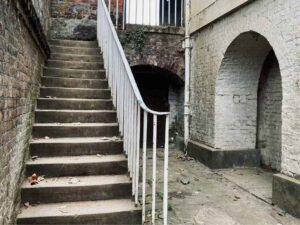
Some buildings have a small sunken space right next to them. It sits below ground level, often near a basement window or a side door. This space is called an areaway. A property survey can locate this feature and show exactly where it sits. That detail matters more than most people think. An areaway can affect basement access, exterior stairs, and even how close a building sits to the property line. Let’s look at why this small feature deserves real attention in a survey.
Showing Where an Areaway Sits in Relation to the Property Boundary
An areaway sits right next to a building. It’s often just a few feet wide. But its exact spot matters a lot.
A property survey can locate the areaway and show how far it sits from the property line. This gives a clear picture of the space, not a rough guess.
This detail matters because an areaway is a real, built feature. It’s not a fence or a plant bed. It often connects straight to the basement. Knowing exactly where it sits helps everyone understand how the building relates to the land around it.
Measuring the Areaway Footprint Along a Narrow Urban Side Yard
Space is tight in many older neighborhoods. This is especially true in parts of Washington, DC, where homes often sit close together with narrow side yards between them.
In spots like this, an areaway can take up a good part of the available width. A survey measures its length, its width, and exactly where it sits within that narrow strip of land.
These numbers matter. A side yard that looks wide enough for a small path might actually have very little usable space once the areaway is accounted for. Clear measurements help avoid that kind of surprise.
Checking Whether the Areaway Extends Into a Public or Shared Area
Some areaways stay fully inside the property. Others creep closer to the edge, sometimes reaching toward a sidewalk or an alley.
A survey checks this directly. It shows whether the areaway sits fully within the parcel, or whether part of it extends toward a public or shared space nearby.
This matters for a simple reason. A feature that sits partly outside the private lot raises different questions than one that stays fully inside. A survey gives a clear, factual answer instead of leaving it open to guessing.
Documenting Areaways During Property Improvements or Building Changes
Areaways often sit right where people want to build next. Maybe new exterior stairs are planned. Maybe a basement entrance is getting upgraded. Maybe a low wall or small addition is in the works nearby.
Before any of that gets designed, the existing areaway needs to be located accurately. A survey shows exactly where it sits, right down to its edges and corners.
This matters because new work often has to fit around the areaway, not through it. Knowing its exact position early helps avoid a design that runs straight into an existing feature nobody measured first.
Why Areaway Details Can Matter During Property and Title Review
An areaway isn’t just a small architectural detail. It can shape how buyers, owners, designers, and title professionals understand a property.
When a survey shows the areaway clearly, everyone gets the same accurate picture. A buyer can see how the feature relates to the building and the lot. A designer can see exactly how much space they have to work with nearby. A title professional can see how the improvement fits within the property as a whole.
This level of detail matters most on tight, older lots. On properties where every foot counts, an accurately surveyed areaway can prevent confusion long before it becomes a real problem.
Frequently Asked Questions
What is an areaway on a property survey?
An areaway is typically an open exterior space beside or below grade near a building. It’s often tied to basement windows, doors, or stairs. It may be shown on a survey when it falls within the survey’s scope.
Why should an areaway be located on a property survey?
Locating it shows how it relates to the building, the property boundary, and any nearby improvements. This gives a clear, accurate picture instead of a rough estimate.
Can a property survey show whether an areaway crosses a property line?
Yes. When the feature is included in the survey, measurements can show the relationship between the areaway and the established property boundary.
Can an areaway extend toward a sidewalk or alley?
Yes. Some urban properties have areaways close to public or shared spaces. Their actual surveyed location can matter a lot when evaluating the site.
Does an areaway need to be surveyed before nearby exterior work is planned?
Yes, in most cases. Documenting the existing areaway gives useful site information before stairs, walls, entrances, or other improvements are designed near it.
For a free land surveying quote, call us at (202) 471-1342 or send us a message by going here.
Posted in Boundary survey | Tagged Boundary survey
