
The Due Diligence Survey Behind a Party-Wall Purchase
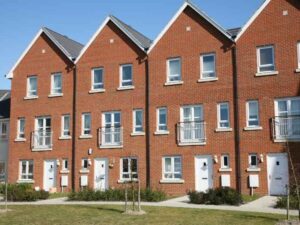
Two buildings share one wall. Whose land is it on? That question can decide whether a purchase goes smoothly or stalls a week before closing.
A due diligence survey is a survey ordered before a purchase to check what you are really buying. It shows property lines, buildings, easements and other features that can affect value or use. A party wall is a wall shared by two neighboring buildings, and it makes this survey more important. This article is written for buyers and investors. Also helps lenders, attorneys and title companies. The main takeaway is to order the survey early and compare it to the title and contract before you commit.
Confirming the Boundary Beneath and Around the Party Wall
The first job of a due diligence survey is to find where the property line runs in relation to the party wall. In many cases the line runs through the middle of the wall. In others it runs along one face, or it sits somewhere else. Recorded documents and field evidence tell the surveyor which one applies.
Many rowhouses and older commercial buildings that were built wall to wall. Some were built more than a century ago. Old deeds may use vague words and old measurements, so the surveyor has to piece together the history.
The surveyor researches recorded plats and deeds, then measures the walls and finds any corner markers still in place. Corners are often hard to find in a dense city block. Walls may have shifted, been rebuilt or been thickened over the years, and the boundary work must account for that.
Ask your surveyor to show the wall thickness and the line position clearly on the drawing. The footing may extend past the wall, so ask whether that will be shown too.
Reviewing Recorded Party-Wall Rights and Shared Obligations
A party-wall right is a legal right tied to a shared wall. It may let each owner use the wall for support. It may also cover who pays for repairs and what happens if one building is torn down. These terms can come from a recorded agreement, a deed or local law.
Your attorney and title company should review the recorded documents. The surveyor cannot give legal advice, but can plot what the documents describe. That may include a party-wall agreement, an easement for the wall, or a note on the plat.
Look for these items in the paperwork:
- A recorded party-wall agreement
- Who owns and maintains the wall
- Rights to support from the wall
- Rules for repairs, rebuilding or demolition
- Any easement for the footing or roof flashing
Rules can vary by property, deed, agreement and jurisdiction. Ask the District’s land records office and your attorney what applies to your address. Do not assume every party wall works the same way.
Documenting Encroachments Along the Shared Building Line
An encroachment is something that reaches past a boundary line onto land owned by someone else. Along a shared building line, small items can cause big questions.
Common examples include:
- Cornices, eaves and gutters that reach over the line
- Bay windows and bays that project past the building face
- Steps, stoops and porches that extend into public space
- Fences, walls or roof decks near the line
- Chimneys, vents and flues built into or against the shared wall
In some projections over public space are allowed under specific rules, and others are not. Check with the city on the permits and approvals that apply to your building. That work is separate from the survey.
Your surveyor measures each item and shows it on the drawing. That lets the buyer, lender and title company see it in plain form. An item may be minor, or it may need a legal fix. The survey shows the facts. The parties decide what to do.
Comparing Survey Findings With Title and Purchase Documents
Once the survey is done, compare it to the title commitment and the contract. This is where many issues first appear. A survey may show a building that does not match the legal description. It may show an easement that the title lists but that no one expected.
Check these items side by side:
- The legal description in the title and the deed
- The lot size and dimensions on the survey
- Recorded easements and where they fall
- Any survey notes about encroachments
- Contract terms about survey review and objections
Title companies may add exceptions to the policy based on the survey. Some issues can be cleared, and others may stay. Ask your title company what it needs and what it may exclude.
The type of survey may also matter. Some lenders or title companies ask for an ALTA/NSPS land title survey on commercial deals. What they require can vary by lender, title company and loan type, so ask early.
Resolving Survey Questions Before the Transaction Moves Forward
If the survey raises questions, deal with them before you close. Start by sharing the survey with your attorney, lender and title company at the same time. Everyone should see the same facts.
A few common next steps may apply:
- Ask the seller to clear or fix the issue
- Ask for a new party-wall or easement agreement
- Ask the surveyor for more detail or a boundary review
- Negotiate the price or closing date
- Cancel the contract, if its terms allow it
Some of these require an attorney. Others may need approval from a neighbor or the city. Do not agree to anything until you understand what it means for the building.
Time is the main risk. Many contracts set a deadline for reviewing the survey. Confirm your dates first, then schedule the survey right away. Survey work in older city blocks can take longer than a routine lot.
For a free land surveying quote, call us at (202) 471-1342 or send us a message by going here.
